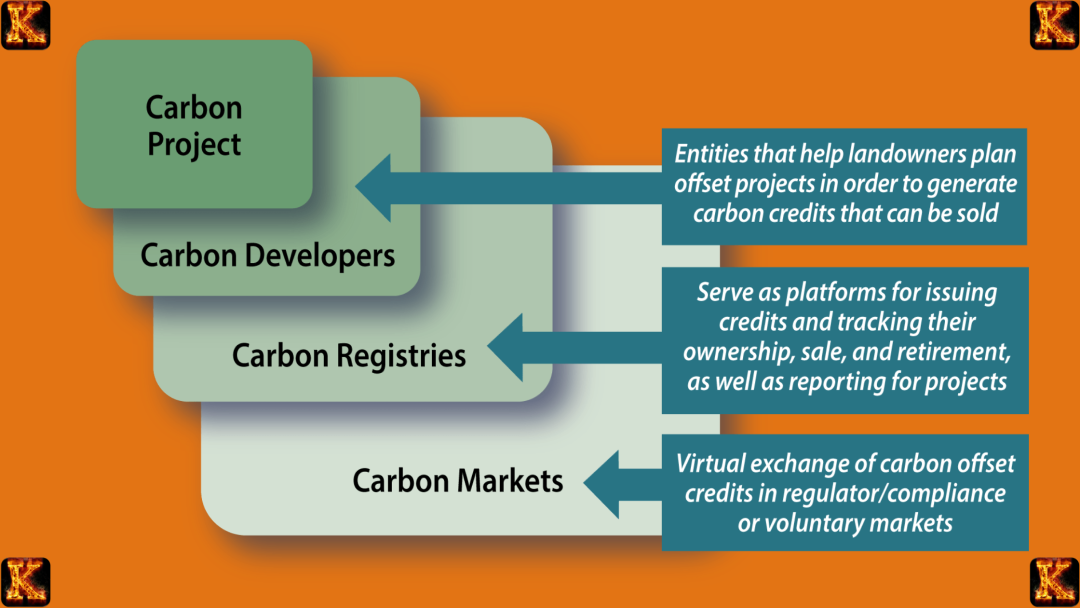
Introduction
System Dynamics in Carbon Credit Trading provides a rigorous analytical framework for understanding how climate policy, market behavior, and environmental outcomes interact over time within modern carbon markets. Climate change is not a short-term or linear problem; it is driven by the long-term accumulation of greenhouse gas emissions and their interaction with economic growth, energy systems, regulatory decisions, and human behavior.
As a result, climate governance increasingly relies on the carbon credit trading system as a market-based instrument to reduce emissions by assigning an economic value to carbon output. Yet carbon markets are inherently complex, characterized by price volatility, policy delays, behavioral responses, and feedback effects that conventional analytical tools often fail to capture.
System dynamics applications address this complexity by modeling carbon markets as interconnected systems of stocks, flows, and feedback loops. Through system dynamics modelling and simulation, analysts can examine how emission caps, carbon credit prices, investment incentives, and compliance behavior evolve over time. When integrated with climate modeling, system dynamics software enables the simulation of real-world carbon trading examples, allowing users to test policy scenarios, assess long-term stability, and evaluate the effectiveness of different carbon credit designs.
For students and policymakers, system dynamics applications in real-world climate policy provide a structured way to understand how carbon credit trading systems function in practice and how strategic interventions can improve market performance while supporting long-term climate objectives.

System Dynamics and Climate Change Modeling
System dynamics and climate change modeling provide a structured way to understand why climate policies often produce delayed, uneven, or unexpected results. Climate systems and carbon markets are not linear; they evolve over time as emissions accumulate, technologies diffuse, regulations change, and human behavior adapts. System dynamics addresses this complexity by focusing on underlying system structures rather than isolated events.
In the context of climate change, it helps students analyze how emissions, economic growth, policy instruments, and environmental limits interact dynamically. When applied to carbon credit trading, system dynamics modeling makes it possible to explore long-term emission pathways, policy effectiveness, and market stability in a way that traditional static models cannot achieve.
Modeling Accumulation and Long-Term Change
A central strength of system dynamics is its ability to represent accumulation over time. In climate change modeling, greenhouse gas emissions are treated as stocks that build up in the atmosphere rather than one-off events. This perspective helps students understand why short-term emission reductions may not immediately translate into climate stabilization. In carbon credit trading systems, emissions accumulate while credits are issued, traded, and retired, creating long-term effects on atmospheric carbon levels.
System dynamics modeling allows learners to connect present-day policy choices, such as emission caps or credit allocation rules, to future climate outcomes. By visualizing accumulation, students gain a clearer understanding of why sustained policy action is required and why delayed interventions often lead to higher long-term costs and risks.
Feedback Loops and Market Behavior
System dynamics emphasizes feedback loops, which are critical in both climate systems and carbon markets. For example, rising carbon prices can encourage emission reductions and clean technology investment, which may later reduce demand for credits and influence prices again. These reinforcing and balancing feedback loops explain why carbon markets can experience volatility or unintended consequences. Climate change modeling uses these feedback structures to show how policies influence behavior over time rather than instantaneously.
For students, this approach clarifies why well-intentioned climate policies sometimes underperform or require adjustment. Understanding feedback loops also helps learners evaluate carbon credit trading mechanisms more critically, recognizing that market outcomes depend on how firms, regulators, and investors respond to changing incentives.
Delays, Uncertainty, and Policy Design
Another key contribution of system dynamics to climate change modeling is its treatment of delays and uncertainty. Climate policies often take years to influence investment decisions, infrastructure development, and emission levels. Similarly, carbon credit trading systems experience delays between policy design, market response, and measurable emission reductions.
System dynamics models explicitly represent these delays, helping students avoid overly optimistic expectations about rapid climate improvements. By simulating different timelines, learners can assess which policy designs are more robust under uncertainty. This approach strengthens understanding of why stable, long-term carbon market rules are essential and why frequent policy changes can undermine both environmental effectiveness and market confidence.
Read Also: Applying Community-Based System Dynamics in Health Equity
Educational Applications of System Dynamics in Carbon Markets
System dynamics has become an essential educational tool for teaching how carbon markets operate within broader climate and economic systems. Traditional classroom methods often struggle to convey the long-term and interconnected nature of climate policy, especially when dealing with carbon pricing, emissions trading, and behavioral responses. System dynamics-based learning addresses this gap by allowing students to experiment with policies in simulated environments and observe how markets and emissions evolve over time.
Through interactive climate change tools, learners move beyond memorization and develop systems thinking skills that help them understand why carbon markets respond differently under varying regulatory, economic, and technological conditions. This experiential approach strengthens analytical reasoning and supports deeper comprehension of climate policy design.
Learning Through Policy Simulation
System dynamics simulations allow students to test climate policies in a risk-free environment. By adjusting variables such as carbon prices, emission caps, or offset availability, learners can observe how carbon markets respond over short and long time horizons. This helps students understand that policy outcomes are not immediate and often depend on cumulative effects and delayed responses.
Through simulation-based learning, students see how well-designed carbon market policies can stabilize emissions, while poorly calibrated interventions may lead to price volatility or limited environmental impact. This hands-on exposure improves policy literacy and equips learners with the ability to critically assess real-world carbon market proposals.
Developing Systems Thinking Skills
A major educational benefit of system dynamics in carbon market studies is the development of systems thinking. Students learn to recognize feedback loops, interdependencies, and unintended consequences within climate policy systems. For example, they can explore how investment in clean technology influences emission reductions, which in turn affects carbon credit demand and market prices.
This perspective helps learners move away from simplistic cause-and-effect reasoning and toward a more holistic understanding of climate governance. Systems thinking skills are particularly valuable for students preparing for careers in sustainability, economics, or public policy, where complex, interconnected problems are the norm rather than the exception.
Bridging Theory and Real-World Decision-Making
System dynamics-based education connects theoretical climate concepts with practical decision-making. By modeling real-world carbon market scenarios, students gain insight into how policy choices translate into economic and environmental outcomes over time. This approach clarifies why some carbon trading systems succeed in reducing emissions while others struggle due to design flaws or weak enforcement.
Educational programs that incorporate system dynamics prepare learners to engage with climate policy debates using evidence-based reasoning. As a result, students are better equipped to evaluate carbon market performance, contribute to policy discussions, and support informed climate action in professional or civic roles.
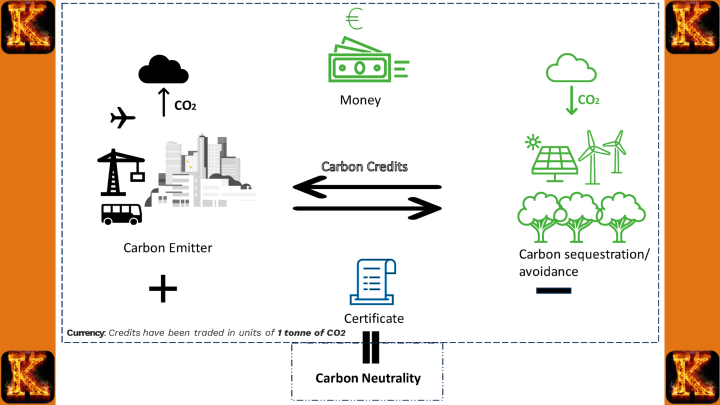
What System Involves the Trading of Carbon Credits?
The trading of carbon credits takes place within an integrated environmental and economic system designed to reduce greenhouse gas emissions through market incentives. Rather than directly prescribing how much each firm must reduce emissions, the system sets rules that create a price for carbon and allows market participants to decide how to respond.
This structure links environmental objectives with economic decision-making, making it possible to reduce emissions at lower overall cost. For students, understanding this system requires looking beyond individual transactions and examining how regulation, market behavior, and long-term climate goals interact. System dynamics helps explain how these elements combine to shape carbon markets over time.
Regulatory Frameworks and Market Structure
At the foundation of carbon credit trading are regulatory and institutional frameworks that define how credits are created, distributed, and used. Governments or international bodies establish the rules of participation, including emission limits, reporting requirements, and enforcement mechanisms. In regulated systems, such as cap-and-trade, authorities determine total allowable emissions and issue credits accordingly.
Voluntary and offset-based systems rely more on standards and certification bodies to ensure credibility. For students, this highlights that carbon trading is not a free market but a structured policy tool. The effectiveness of the system depends heavily on clear rules, credible oversight, and consistent enforcement over time.
Economic Incentives and Participant Behavior
Carbon credit trading systems influence behavior by changing the economic costs of emitting greenhouse gases. When carbon carries a price, firms and organizations face incentives to reduce emissions, invest in cleaner technologies, or purchase credits to comply with regulations. Different participants respond differently depending on their costs, resources, and expectations about future policy.
System dynamics analysis helps students understand how these behavioral responses aggregate across the market and influence overall emission trends. It also shows why short-term market reactions may differ from long-term outcomes, especially when firms anticipate future tightening of climate policies or technological change.
Market Dynamics and Long-Term Performance
Carbon credit markets evolve over time as policies, technologies, and economic conditions change. Credit supply, demand, and prices are influenced by factors such as economic growth, innovation, and regulatory adjustments. System dynamics modeling captures these interactions by representing how decisions made today affect future market conditions and emission levels.
For students, this perspective explains why carbon markets can experience price volatility or uneven performance in their early stages. It also clarifies the importance of stable, predictable policy design to support long-term emission reductions. Understanding these dynamics is essential for evaluating whether a carbon credit trading system is achieving its environmental objectives.
Read Also: Business Ethics and Social Responsibility for SMEs
How the Carbon Credits Trading System Works
The carbon credits trading system functions through structured market arrangements that translate emission reduction goals into economic incentives. Rather than relying solely on direct regulation, these systems allow participants to choose how they meet climate objectives, whether by reducing emissions, investing in cleaner technologies, or purchasing credits.
For students, understanding how the system works requires examining the institutional models that govern participation, the rules that shape market behavior, and the mechanisms that ensure environmental integrity. Although these models differ in scope and regulation, they all aim to reduce greenhouse gas emissions by aligning environmental responsibility with economic decision-making.
Cap-and-Trade Systems and Emission Limits
Cap-and-trade systems operate by setting a fixed limit on total emissions within a defined sector or economy. Regulators issue emission allowances equal to this limit, and firms must hold enough allowances to cover their emissions. Companies that reduce emissions below their allowance level can sell surplus credits, while those that exceed their limits must purchase additional ones.
Over time, the emissions cap is gradually lowered to meet climate targets. This structure encourages firms to plan for long-term emission reductions rather than relying on short-term compliance. System dynamics analysis helps students understand how allowance scarcity, trading behavior, and delayed investment decisions influence both carbon prices and environmental outcomes.
Voluntary Carbon Markets and Offset Demand
Voluntary carbon markets allow organizations and individuals to compensate for emissions that are not covered by regulation. Credits in these markets are generated by projects that reduce or remove emissions, such as renewable energy development or forest conservation. Participation is driven by corporate sustainability goals, reputational concerns, and climate commitments rather than legal requirements.
For students, these markets illustrate how non-regulatory incentives can mobilize climate finance and support emission reduction efforts. System dynamics modeling helps analyze how voluntary demand grows over time, how credit supply responds, and why issues such as oversupply or weak standards can reduce market credibility if not properly managed.
Carbon Offset Mechanisms and Environmental Integrity
Carbon offset mechanisms connect emitters with projects that reduce or remove emissions elsewhere, offering flexibility in both regulated and voluntary settings. Offsets are widely used in sectors where direct emission reductions are technically or economically challenging. However, their effectiveness depends on the quality of the projects involved.
System dynamics and climate modeling help students evaluate offset integrity by examining whether emission reductions are additional, long-lasting, and free from leakage. This perspective clarifies why strong monitoring and verification systems are essential. Understanding offset mechanisms equips learners to assess whether carbon credit trading contributes to real climate benefits or merely shifts emissions without reducing them overall.
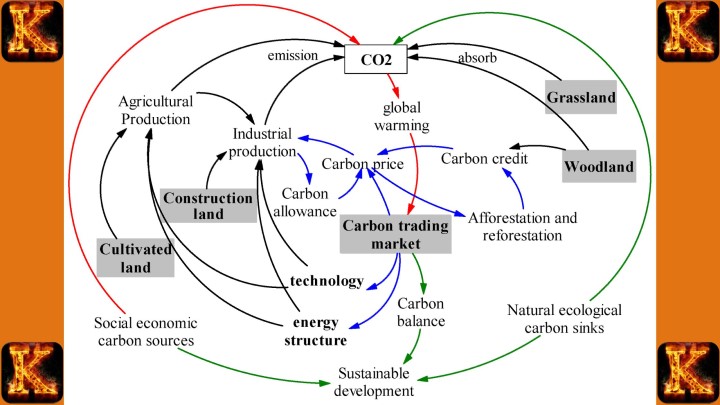
Why Use System Dynamics in Carbon Credit Trading?
Carbon credit trading operates within a complex and evolving policy environment where economic incentives, regulatory decisions, and behavioral responses interact over long time horizons. Emission reductions do not occur instantly, and market participants adjust their strategies as policies, prices, and expectations change. Because of these characteristics, traditional linear or static analytical tools often provide an incomplete picture of how carbon markets perform.
System dynamics offers a more appropriate framework by focusing on how structure, feedback, and delays shape outcomes over time. For students, this approach clarifies why carbon markets may behave unpredictably in the short term yet follow identifiable patterns in the long run.
Understanding Feedback and Market Stability
System dynamics helps explain how feedback processes influence carbon market stability. For example, rising carbon prices can encourage emission reductions and investment in clean technologies, which may later reduce demand for credits and affect prices again. These feedback relationships can either stabilize the market or create volatility if poorly managed. By modeling such interactions, students learn why carbon markets sometimes experience price swings and how policy tools can moderate them. This understanding is essential for evaluating whether a trading system is likely to deliver consistent emission reductions over time rather than short-lived compliance outcomes.
Accounting for Delays and Behavioral Change
A key advantage of system dynamics is its explicit treatment of delays between policy decisions and observable results. In carbon credit trading, firms need time to adopt new technologies, adjust operations, and respond to price signals. Behavioral resistance, investment cycles, and regulatory lag all influence how quickly emissions decline. System dynamics models allow students to explore these delays and understand why ambitious climate policies may take years to show measurable impact. This perspective helps avoid unrealistic expectations and supports more credible assessments of policy effectiveness.
Supporting Learning, Policy Testing, and Dialogue
System dynamics provides a practical platform for testing policy ideas before they are implemented. Students and policymakers can simulate alternative carbon market designs and observe their long-term effects on emissions, prices, and compliance behavior. This approach encourages evidence-based reasoning and informed dialogue among stakeholders with different interests.
In educational settings, system dynamics tools strengthen climate literacy by making abstract concepts tangible and interactive. As a result, learners develop the analytical skills needed to engage constructively in climate policy discussions and evaluate carbon credit trading systems more critically.

The Four Types of Carbon Credits
Carbon credits are not uniform instruments; they differ in how they achieve emission mitigation and in the risks they carry over time. Understanding these differences is essential for evaluating the environmental integrity and long-term effectiveness of carbon credit trading systems. From a learning perspective, system dynamics and climate modeling help students analyze how each credit type performs under changing economic, ecological, and policy conditions. By examining credit categories separately, learners can better understand why balanced credit portfolios are important and why reliance on a single approach may undermine climate goals.
Avoidance Credits
Avoidance credits are generated by preventing emissions that would have occurred in the absence of a specific intervention. Common examples include avoiding deforestation, protecting wetlands, or preventing methane leaks. These credits play an important role in slowing near-term emissions growth, particularly in regions facing land-use pressure. However, their effectiveness depends heavily on governance and long-term protection.
System dynamics analysis helps students understand risks such as reversal, where emissions may occur later due to policy changes or environmental shocks. Modeling also highlights leakage, where preventing emissions in one area may shift them elsewhere. This perspective emphasizes the need for strong institutional oversight and long-term land-use planning to ensure avoidance credits deliver lasting climate benefits.
Reduction Credits
Reduction credits represent measurable decreases in ongoing emissions achieved through efficiency improvements, cleaner technologies, or fuel switching. Examples include upgrading industrial equipment, improving energy efficiency, or transitioning from fossil fuels to renewable energy. These credits are often easier to quantify and verify than other types because reductions can be directly measured against a baseline.
From a system dynamics perspective, reduction credits illustrate how investment decisions and technological adoption unfold over time. Students learn that initial costs and behavioral resistance may slow early uptake, while long-term benefits increase as technologies mature. This understanding helps explain why supportive policies and stable incentives are necessary to sustain emission reductions across economic sectors.
Sequestration Credits
Sequestration credits are earned by capturing and storing carbon in natural systems such as forests, soils, and coastal ecosystems. These credits contribute to climate mitigation by removing carbon from the atmosphere and storing it over extended periods. However, sequestration is inherently time-dependent and sensitive to environmental conditions.
Climate modeling helps students assess permanence risks, including forest fires, land-use change, and ecosystem degradation. System dynamics analysis also shows that natural systems have limits, such as carbon saturation, beyond which additional storage becomes less effective. This highlights the importance of long-term monitoring, maintenance, and adaptive management when relying on sequestration credits within carbon markets.
Removal Credits
Removal credits involve actively extracting carbon dioxide from the atmosphere using technological or engineered solutions. Examples include direct air capture and bioenergy with carbon capture. These credits are increasingly viewed as essential for achieving net-zero emissions, particularly for offsetting residual emissions that are difficult to eliminate.
However, removal technologies are currently expensive and energy-intensive. System dynamics modeling helps students explore learning curves, cost reductions, and scalability over time. This perspective clarifies why removal credits should complement, rather than replace, emission reduction efforts. Understanding removal credits equips learners to evaluate their role realistically within long-term climate strategies.
Read Also: How Neoliberal Capitalism Thrives on Inequality
Modeling Credit Portfolios and Market Integrity
Carbon markets are more effective when the mix of credits reflects both environmental impact and market stability. Simply accumulating credits without considering their type, quality, or long-term reliability can undermine climate objectives and create opportunities for superficial compliance, often referred to as greenwashing. Modeling carbon credit portfolios using system dynamics allows students to analyze how different credit types, including avoidance, reduction, sequestration, and removal credits, interact over time.
This approach also enables evaluation of carbon credit price trends, market behavior, and system resilience under changing policy and economic conditions. By applying system dynamics modeling and simulation, students gain a practical understanding of how portfolio composition and market dynamics influence the effectiveness of carbon credit trading systems, emphasizing long-term outcomes rather than isolated transactions.
Simulating Credit Mix Effects
System dynamics modeling allows the simulation of diverse credit portfolios to understand how combinations of avoidance, reduction, sequestration, and removal credits affect market outcomes. For example, overreliance on avoidance credits might initially reduce emissions but could risk reversal if governance or natural conditions fail.
Conversely, a balanced mix can stabilize prices, encourage investment in low-carbon technologies, and enhance cumulative emissions reduction over decades. Students learn to evaluate the trade-offs between short-term impact, long-term sustainability, and financial stability, understanding that portfolio composition directly influences both climate effectiveness and market credibility.
Assessing Permanence and Additionality
A core consideration in credit portfolio modeling is whether emission reductions or removals are permanent and additional. System dynamics enables learners to examine scenarios where carbon stored in natural systems might be released later or where projects would have occurred even without carbon credit funding. Modeling helps illustrate how these factors influence the true climate impact of a portfolio. Students gain insight into why permanence and additionality are critical for maintaining market integrity, guiding decisions about which credit types to prioritize and how to design regulatory frameworks that minimize risks and ensure that credits reflect genuine emission reductions.
Ensuring Market Integrity and Avoiding Greenwashing
Maintaining market credibility requires that carbon credits are verifiable, traceable, and resilient against manipulation. System dynamics models allow students to simulate how verification failures, oversupply, or poorly designed offset projects can distort prices and undermine confidence. By exploring feedback loops, delayed responses, and market adjustments, learners understand the systemic consequences of weak oversight or low-quality credits. This knowledge equips students and future policymakers to identify risks, design safeguards, and evaluate whether a portfolio supports real emissions reductions, reinforcing the importance of integrity and transparency in carbon markets.
Conclusion
Applying system dynamics to carbon credit trading provides a structured way to analyze the interaction between climate policy, market behavior, and environmental outcomes. Through climate modeling, stakeholders can evaluate long-term risks, design more stable carbon markets, and align economic incentives with climate resilience.
Educational initiatives such as the Climate Change Ambassador Program, along with interactive platforms like Simulating Climate Futures in the En-ROADS Laboratory, make these concepts accessible to learners. Academic support platforms including Kector.com, MyAssignmentHelp.com, and WritersPerHour.com continue to support students working on system dynamics climate change analysis and carbon market research.
Ultimately, system dynamics transforms carbon credit trading from a short-term compliance tool into a long-term strategic mechanism for sustainable climate governance.
Comments are closed!