Introduction
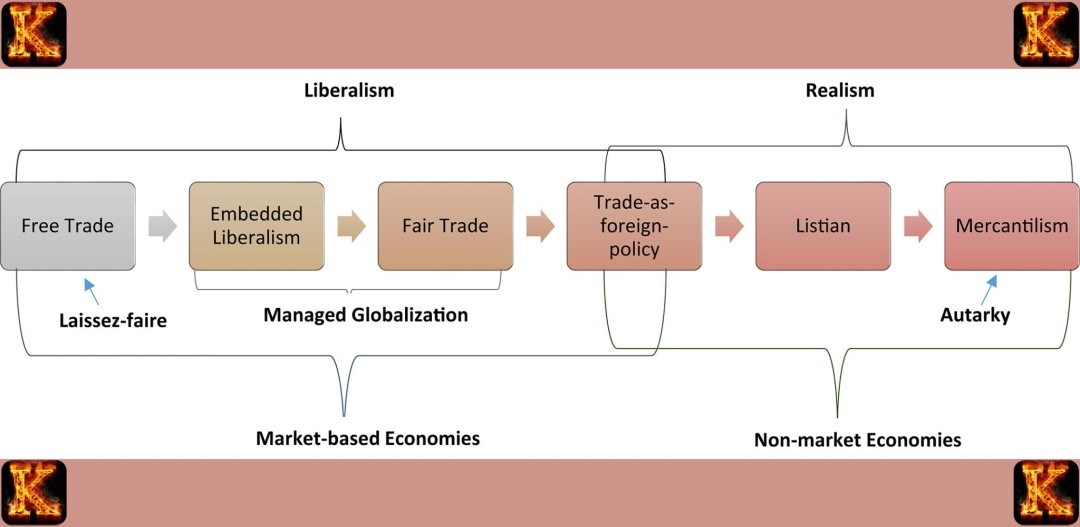
In the modern world, economic ideologies shape the fate of nations and the dynamics of global trade. Among these, mercantilism and neoliberalism stand out as two contrasting approaches that have defined different eras of economic thought and policy. Mercantilism, rooted in the economic history of 16th to 18th century Europe, is a theory of state-controlled trade that emphasizes the accumulation of wealth through trade surpluses, protectionism, and strategic economic planning.
Historically, mercantilist policies included tariffs, monopolies, and colonial trade restrictions designed to strengthen the power and wealth of the state. In contrast, neoliberalism emerged as a dominant ideology in the late 20th century, promoting market liberalization, minimal state intervention, privatization, and global free trade, building on classical liberal principles of capitalism.
Today, the rise of mercantilism in the world is increasingly visible as states adopt neo-mercantilist strategies to safeguard economic security, industrial growth, and strategic resources. This trend is particularly evident in trade policies, industrial subsidies, and nationalistic economic measures across major global economies. At the same time, neoliberalism faces growing criticism and signs of decline, as its promises of universal prosperity falter under rising inequality, financial crises, and the challenges of globalization.
This essay examines the rise of mercantilism and the decline of neoliberalism in the modern world order, exploring historical theory, modern examples, and the tensions between these two economic models. It argues that mercantilist ideas are resurging as neoliberal policies fail to address contemporary economic instability, social inequality, and the strategic interests of nation-states, reshaping the landscape of global trade and governance.

What is Mercantilism?
Understanding mercantilism and neoliberalism begins with exploring the origins and principles of mercantilism, a foundational economic theory that shaped global trade for centuries. The rise of mercantilism in the world occurred during the 16th to 18th centuries in Europe, a period marked by the expansion of colonial empires, the accumulation of wealth, and the strategic strengthening of states. At its core, mercantilism argued that a nation’s economic power depended on controlling trade, accumulating precious metals, and maintaining a favorable balance of trade.
Key Principles of Mercantilism
1. State Control
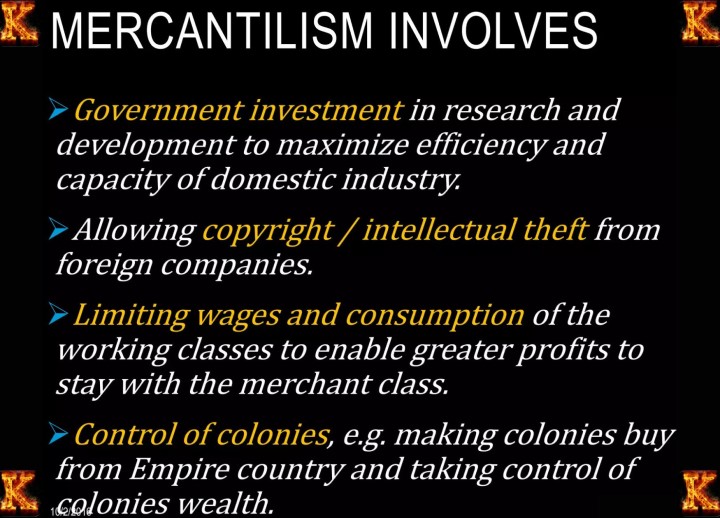
Mercantilism emphasized strong government involvement in the economy. Governments actively guided production, trade, and investment to strengthen the state’s wealth and power. This meant regulating industries, granting monopolies, and controlling exports and imports. Unlike modern neoliberalism, which relies on market forces, mercantilist states directly intervened to ensure national economic advantage. State control allowed countries to prioritize strategic industries, manage resources efficiently, and maintain economic stability. Today, neo-mercantilist policies, such as industrial subsidies and strategic trade plans, reflect this historical principle, highlighting the contrast in mercantilism vs neoliberalism in the modern world order.
2. Trade Surplus
A central principle of mercantilism was achieving a trade surplus, exporting more goods than were imported. Nations believed that accumulating wealth through exports strengthened their economies, created jobs, and increased national power. Trade deficits, by contrast, were seen as harmful because they drained precious metals from the country. This principle encouraged countries to focus on producing goods for export while restricting foreign imports. Modern parallels include countries pursuing export-led growth and using tariffs or quotas to protect domestic industries, illustrating the rise of mercantilism in the world in response to neoliberal global trade pressures.
3. Bullionism
Bullionism measured national prosperity by the accumulation of precious metals, such as gold and silver. Mercantilists believed that wealth was finite, so hoarding bullion was essential to maintain power and security. This focus often drove colonial expansion and the extraction of resources from colonies. By accumulating bullion, states could fund armies, infrastructure, and trade expeditions. Today, while modern economies do not rely solely on bullion, neo-mercantilist strategies still aim to secure strategic resources and maintain economic independence, reflecting how mercantilism and neoliberalism diverge in their approach to national wealth.
4. Tariffs and Protectionism
Tariffs and protectionist measures were used to shield domestic industries from foreign competition. By imposing duties on imports and restricting certain goods, governments could encourage local production and reduce reliance on external markets. Protectionism helped maintain trade surpluses and strengthen strategic industries. Modern examples include import tariffs, subsidies, and industrial policy measures adopted by major economies like the US, China, and the EU. This principle underscores the resurgence of mercantilism in the modern world as countries seek to protect their economic interests, challenging the free-market emphasis of neoliberalism.
Historical Examples of Mercantilist Policies
1. Colonial Trade Monopolies
European powers, such as Britain, granted exclusive trading rights to companies like the East India Company. These monopolies controlled trade routes, extracted resources, and ensured wealth flowed back to the mother country. Monopolies exemplified mercantilism’s focus on state-managed economic advantage and wealth accumulation.
2. Navigation Acts
Laws like the British Navigation Acts restricted colonial trade to benefit the mother country. Colonies could trade only with England or on English ships, ensuring profits and resources remained under state control. These acts strengthened national power while limiting foreign influence.
3. State-Sponsored Industries and Subsidies
Governments provided funding, incentives, and protections to key industries, ensuring domestic production met strategic and economic goals. Subsidies encouraged innovation, industrial growth, and national self-sufficiency, reflecting the state’s central role in economic management.
The mercantilism theory of international trade emphasized that global wealth was finite, leading nations to compete for resources, colonies, and markets. Unlike modern neoliberalism, which promotes free markets and minimal state intervention, mercantilism relied on strategic state power to achieve economic dominance.
In today’s context, the principles of mercantilism are resurfacing as nations adopt neo-mercantilist strategies, challenging the liberal free-market order and highlighting the ongoing tension in mercantilism vs neoliberalism in the modern world order. Understanding these foundations is essential for analyzing the rise of mercantilism and neoliberalism’s decline in contemporary global trade.
Read Also: How Neoliberal Capitalism Thrives on Inequality
Neoliberalism in Theory and Practice
The debate between mercantilism and neoliberalism in the modern world highlights two contrasting visions of economic organization. While mercantilism emphasizes state control and strategic trade, neoliberalism promotes minimal government intervention, relying on market forces to drive growth. Compared to classical liberalism or capitalism, which advocated free enterprise and private property, neoliberalism extends these ideas into a globalized context, emphasizing deregulation, privatization, and liberalized trade as tools for national prosperity. Understanding neoliberalism is essential for analyzing the rise of mercantilism in the world as a response to its perceived failures.
Core Principles of Neoliberalism:
1. Free Markets
A central principle of neoliberalism is the belief in free markets, where prices, production, and resource allocation are determined by supply and demand rather than government intervention. By letting market forces operate freely, economies are expected to achieve efficiency, innovation, and wealth creation. This contrasts sharply with mercantilism, where the state actively regulates trade and industry. Free markets encourage competition, which can lead to better products, lower prices, and economic growth. However, critics argue that without regulation, markets can produce inequality and financial instability. In the context of mercantilism vs neoliberalism, free markets represent the neoliberal vision of minimal state control in modern trade.
2. Privatization
Privatization is another key principle, where public assets and services are transferred to private ownership. The goal is to increase efficiency, reduce government costs, and encourage private sector innovation. Examples include privatized utilities, healthcare systems, and transportation services. Privatization assumes that private companies operate more efficiently than government agencies, responding better to market incentives. This principle highlights the contrast with mercantilist strategies, where the state owns or closely controls key industries to secure national wealth and strategic advantage. Today, the tension between privatization and state-led policies reflects the rise of mercantilism in the world against neoliberal ideals.
3. Deregulation
Deregulation reduces government-imposed rules on businesses to encourage entrepreneurship, competition, and economic growth. By removing restrictions, companies can innovate freely, enter new markets, and optimize operations. For instance, deregulated financial markets allow banks and investors more freedom to operate, promoting investment and growth. Neoliberal thought holds that deregulation drives efficiency and maximizes wealth. However, excessive deregulation can lead to economic crises and social inequality. The contrast with mercantilism is clear: mercantilist policies favor strict state oversight and control, while neoliberalism trusts market self-regulation as the best path to prosperity.
4. Globalization
Globalization under neoliberalism promotes the liberalization of international trade and investment, integrating national economies into a global system. This includes reducing tariffs, encouraging cross-border investment, and facilitating multinational supply chains. Globalization enables countries to specialize, access new markets, and benefit from comparative advantages. While it has driven economic growth and technological advancement, critics argue it also increases inequality, undermines local industries, and exposes countries to global economic shocks. In contrast, mercantilist policies prioritize national self-sufficiency and control over strategic resources, highlighting the tension in mercantilism vs neoliberalism in the modern world order.
Historical Rise and Achievements of Neoliberalism
1. Historical Rise (1970s–2000s)
Neoliberalism gained prominence in the 1970s and became the dominant economic ideology by the 1980s and 1990s. Leaders like Margaret Thatcher in the UK and Ronald Reagan in the US championed policies emphasizing free markets, deregulation, and privatization. This shift marked a departure from post-war Keynesian economic approaches, which relied heavily on government intervention. The rise of neoliberalism shaped global economic institutions, trade policies, and national strategies. Its adoption worldwide created a more interconnected economy, highlighting the tension in mercantilism vs neoliberalism in the modern world order, as states experimented with minimizing state control in favor of market-driven growth.
2. Achievements of Neoliberalism
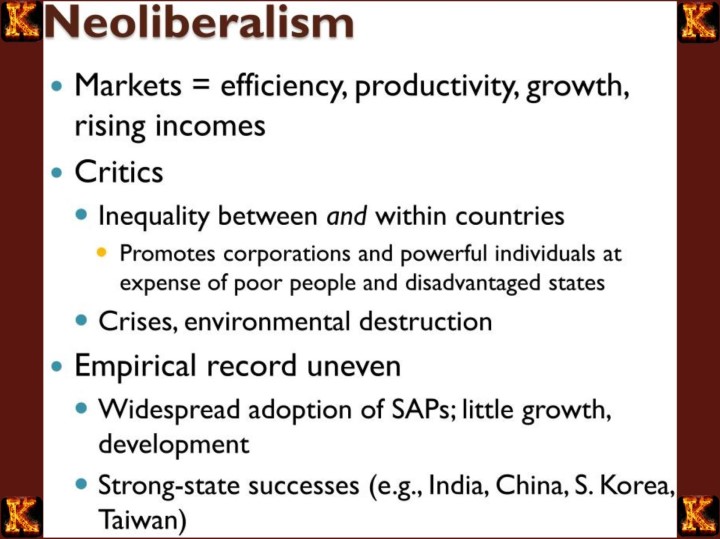
Neoliberal policies produced significant economic outcomes. They encouraged cross-border investment, enabling businesses to expand internationally and access new markets. Technological innovation accelerated as companies competed in deregulated environments. The ideology also supported the growth of multinational corporations and global supply chains, increasing efficiency and connecting economies. Countries adopting neoliberal reforms often experienced sustained economic growth and rising productivity. These successes, however, were unevenly distributed, benefiting urban and industrial sectors more than marginalized populations. Despite its achievements, these outcomes also revealed limitations, setting the stage for the rise of mercantilism in the world as nations sought greater economic security.
3. Criticisms and Consequences
While neoliberalism promoted growth, critics argue it also created inequality, financial instability, and overreliance on global markets. Deregulated financial systems contributed to crises like the 2008 global recession, while privatization sometimes undermined access to essential services. Social safety nets weakened, leaving vulnerable populations exposed. These failures prompted some countries to reconsider state-led economic strategies, reflecting a resurgence of mercantilist policies that prioritize national control over markets. The limitations of neoliberalism demonstrate why mercantilism and neoliberalism continue to clash in shaping modern economic policy and the global trade order.
The Rise of Mercantilism in the Modern World
The tension between mercantilism and neoliberalism has intensified in recent decades as many nations reconsider the limits of free-market policies. While neoliberalism emphasizes minimal state intervention and globalized trade, neo-mercantilism represents a resurgence of state-led economic strategies. Governments are increasingly guiding trade, supporting strategic industries, and shaping economic planning to secure national advantage. This modern adaptation of mercantilism demonstrates how the rise of mercantilism in the world is not merely a historical echo but a deliberate response to the perceived failures of neoliberal globalization, including inequality, economic instability, and dependence on foreign markets.
Neo-Mercantilism Explained
Neo-mercantilism is the modern application of mercantilist principles, emphasizing state control over economic activity, strategic trade planning, and industrial policy to achieve national objectives. Governments intervene directly in production, provide subsidies to key industries, and regulate trade to maintain competitiveness. Unlike classical mercantilism, neo-mercantilism operates within a globalized context but maintains the goal of maximizing national wealth and security. By linking domestic economic policy with international trade strategy, neo-mercantilist states actively manage economic outcomes rather than leaving them to free markets, highlighting the ongoing relevance of mercantilism theory of international trade in practice.
Modern Examples of Neo-Mercantilism
1. China
China exemplifies the modern rise of mercantilism in the world through state-guided economic growth. The government directs industrial planning, invests heavily in infrastructure, and implements initiatives like the Belt and Road Initiative to secure trade routes and expand global influence. By controlling strategic industries and fostering international partnerships, China demonstrates how mercantilism theory of international trade operates today. This approach contrasts sharply with neoliberal ideals of minimal state intervention, highlighting the tension in mercantilism vs neoliberalism in the modern world order. China’s policies show that state-led strategies can drive economic power and geopolitical leverage in a globalized economy.
2. United States
The United States has increasingly adopted neo-mercantilist strategies under policies like tariffs, trade wars, and the “America First” economic agenda. By protecting domestic industries, reducing trade deficits, and promoting local manufacturing, the US prioritizes national economic security over global liberalization. These measures illustrate the resurgence of mercantilist policies as a response to the shortcomings of neoliberalism, such as overdependence on international supply chains. The contrast between Mercantilism and Neoliberalism is clear: while neoliberalism promotes free markets, the US demonstrates a return to state-guided economic protection to maintain competitiveness and strategic advantage.
3. European Union
The European Union employs strategic trade policies and industrial subsidies to strengthen critical sectors and maintain economic resilience. By supporting technology, energy, and manufacturing industries, the EU ensures long-term competitiveness while managing exposure to global market shocks. This approach reflects neo-mercantilism, where the state shapes economic outcomes to secure national and regional interests. The EU example reinforces the broader theme of mercantilism vs neoliberalism in the modern world, showing that even highly globalized economies are moving back toward state-led planning to safeguard prosperity and influence.
Reasons for the Resurgence
1. Overreliance on Global Markets
One major reason for the resurgence of mercantilism is the overdependence on global markets under neoliberal policies. Many countries discovered that relying heavily on international trade and foreign supply chains leaves them vulnerable to disruptions, such as economic crises, trade disputes, or pandemics. Neo-mercantilist strategies aim to reduce this risk by strengthening domestic production, controlling strategic industries, and maintaining trade surpluses. By doing so, states regain economic stability and ensure that national interests are not entirely subject to external market fluctuations. This shift illustrates the tension in mercantilism vs neoliberalism in the modern world order.
2. Supply Chain Disruptions
Supply chain vulnerabilities have exposed weaknesses in purely market-driven economies. Events like natural disasters, pandemics, or geopolitical conflicts can interrupt the flow of essential goods. Neo-mercantilism addresses this by promoting state-guided industrial planning, local production, and strategic reserves, ensuring that critical goods remain available regardless of global conditions. By controlling supply chains and prioritizing national needs, states enhance resilience and economic security. This practice demonstrates how the rise of mercantilism in the world today is a direct response to the limitations of neoliberal globalization, which assumes uninterrupted free-market efficiency.
3. Economic Inequality
Neoliberal policies have often exacerbated income and wealth inequality, leaving certain populations marginalized. This has led governments to reconsider state intervention in the economy to redistribute resources and protect strategic industries. Neo-mercantilism allows countries to combine economic growth with national planning, ensuring that key sectors generate employment, maintain competitiveness, and support long-term development. By prioritizing national interests and equitable economic outcomes, states are reasserting control over markets, showing why Mercantilism and Neoliberalism are increasingly at odds in shaping contemporary global trade and economic policy.
4. National Security and Strategic Resources
Modern neo-mercantilist strategies focus on securing strategic resources and protecting national security. Access to energy, technology, and critical materials is vital for economic and geopolitical power. States intervene in trade, invest in key industries, and regulate foreign investment to safeguard sovereignty. This approach contrasts sharply with neoliberal reliance on open markets, demonstrating how the rise of mercantilism in the world allows nations to balance economic growth with strategic autonomy and global influence.
Read Also: Applying System Dynamics in Carbon Credit Trading
The Decline of Neoliberalism
The global debate between mercantilism and neoliberalism has intensified as neoliberal policies face growing criticism. Once celebrated for promoting economic liberalization, deregulation, and global trade, neoliberalism is increasingly challenged for its failures to ensure equitable growth and economic stability. The rising popularity of neo-mercantilist strategies demonstrates how states are reconsidering free-market approaches to safeguard national interests. Understanding the decline of neoliberalism helps explain why countries are returning to state-led policies, and why the rise of mercantilism in the world is closely linked to the shortcomings of neoliberal global governance.
Failures and Criticisms of Neoliberalism
1. Rising Inequality
One major criticism of neoliberalism is rising inequality. While global trade and market liberalization created wealth, the benefits were unevenly distributed, favoring wealthy elites and urban centers. Many low-income populations experienced stagnating wages, limited access to services, and social exclusion. This disparity undermines social cohesion and highlights a key limitation of free-market policies that prioritize efficiency over equity. The growing gap between rich and poor demonstrates why the rise of mercantilism in the world is partly a response, as state-led strategies aim to balance growth with broader economic security and reduce inequality.
2. Economic Crises
Neoliberal policies have contributed to economic crises due to deregulated financial markets and minimal government oversight. Speculative investments, unregulated banking practices, and reliance on market self-correction created instability, exemplified by the 2008 global financial crisis. These events revealed that markets alone cannot guarantee stability, and excessive liberalization can amplify risk. Neo-mercantilist approaches, which emphasize state intervention and strategic economic planning, seek to mitigate such vulnerabilities. The contrast between mercantilism and neoliberalism becomes evident as countries adopt proactive policies to prevent market collapses while still pursuing global competitiveness.
3. Weakened State Control
A further criticism is weakened state control. Neoliberalism reduces government involvement in economic decision-making, limiting the ability to respond effectively to market failures. Public oversight of key industries, financial institutions, and critical infrastructure is minimized, leaving economies exposed to shocks. This lack of regulation can harm social welfare and reduce resilience. In contrast, modern neo-mercantilism restores state-guided economic planning, demonstrating how nations now combine historical mercantilist principles with contemporary governance to protect their strategic and economic interests.
4. Trade Imbalances
Finally, neoliberalism often leads to trade imbalances. Excessive reliance on exports and foreign investment creates vulnerabilities, as countries depend heavily on global markets for essential goods and economic growth. When international conditions change, such as through tariffs, crises, or supply chain disruptions, economies can experience instability. Neo-mercantilist strategies address this by promoting domestic production, tariffs, and strategic trade policies, illustrating why the rise of mercantilism in the world is a deliberate response to neoliberal shortcomings in managing trade and national security.
Global Crises Revealing Limits
Several crises have highlighted neoliberalism’s limitations. The 2008 financial crisis exposed the dangers of underregulated banking systems, resulting in widespread economic disruption. Similarly, the COVID-19 pandemic revealed vulnerabilities in global supply chains, with countries struggling to secure essential goods. These events show that the assumption of uninterrupted, self-correcting markets is flawed. In response, governments have reconsidered interventionist strategies, strengthening domestic production, and safeguarding strategic industries, echoing the principles of mercantilism theory of international trade in practice.
Link to the Rise of Mercantilism
The failures of neoliberalism have encouraged the rise of mercantilism in the world today. States are adopting neo-mercantilist policies to regain control over trade, secure resources, and reduce dependency on global markets. By prioritizing industrial planning, tariffs, and strategic investments, governments seek economic stability and national security. This trend demonstrates the ongoing tension between Mercantilism and Neoliberalism, highlighting how the decline of one economic model often leads to the resurgence of the other in shaping the modern global economy.
Mercantilism vs Neoliberalism in the Modern World Order
The ongoing tension between mercantilism and neoliberalism defines much of the contemporary global economic landscape. While neoliberalism champions free markets, minimal state intervention, and global integration, mercantilism prioritizes state-led economic planning, strategic trade, and national security. Understanding the contrasts between these two ideologies is essential for analyzing global trade conflicts, economic policy choices, and the resurgence of neo-mercantilist strategies in the 21st century. The debate illustrates how the rise of mercantilism in the world is both a historical revival and a response to the limitations of neoliberal globalization.
1. State Intervention vs Free Markets
Mercantilism emphasizes strong state intervention to guide economic activity, protect strategic industries, and regulate trade. In contrast, neoliberalism advocates free markets, assuming that efficiency and growth emerge from minimal government interference. Modern examples include China’s industrial policy and the US tariffs under the “America First” agenda, which clash with neoliberal norms of liberalized trade. The tension between intervention and market freedom shapes policymaking, illustrating the broader struggle between mercantilism vs neoliberalism in the modern world order. Countries adopting state-led strategies prioritize sovereignty and resilience over unrestricted market efficiency.
2. National Economic Security vs Global Liberalization
Neo-mercantilism focuses on national economic security, safeguarding domestic industries and strategic resources. Neoliberalism, in contrast, promotes global liberalization, encouraging open borders, trade liberalization, and cross-border investment. Conflicts arise when countries impose tariffs, export controls, or subsidies to protect domestic markets, challenging the neoliberal ideal of free trade. Examples include US-China trade disputes and EU industrial subsidies. These clashes highlight how the rise of mercantilism in the world reflects the prioritization of sovereignty and security over the global free-market principles promoted by neoliberalism.
3. Strategic Trade vs Laissez-Faire Efficiency
Mercantilist strategies prioritize strategic trade, state support for key industries, and long-term economic planning. Neoliberalism emphasizes laissez-faire efficiency, relying on market forces to allocate resources. The tension manifests in global disputes over technology, energy, and critical minerals, where states assert control to secure advantage. The competition between strategic national interests and market-driven efficiency demonstrates the ongoing relevance of mercantilism theory of international trade in the modern world.
4. Implications for Global Trade, Diplomacy, and Policy
The conflict between these ideologies reshapes global trade and diplomacy. Neo-mercantilist policies can provoke trade wars, disrupt supply chains, and influence alliances. Meanwhile, neoliberal proponents argue that liberalized markets foster innovation and economic growth. Understanding mercantilism and neoliberalism helps students analyze why countries navigate between free-market ideals and state-led strategies, balancing efficiency, security, and national competitiveness in the modern global economy.
Read Also: China’s Role in the Myanmar Civil War
The Role of BRICS in the Modern Mercantilist World Order
The emergence of BRICS (Brazil, Russia, India, China, and South Africa) has become central to understanding the rise of mercantilism in the world today. These nations exemplify how neo-mercantilist strategies can coexist with global integration while prioritizing state-led growth and strategic economic planning. Unlike neoliberal economies that emphasize market liberalization, BRICS countries often combine state intervention, industrial policy, and targeted trade agreements to secure national advantages. Their coordinated approach challenges traditional Western-led neoliberal frameworks, highlighting the ongoing tension between mercantilism and neoliberalism in shaping the modern world order.
1. China’s Mercantilist Strategy
Within BRICS, China is the most prominent example of modern mercantilism. The government directs economic growth through industrial planning, infrastructure investment, and initiatives like the Belt and Road Initiative. These policies expand China’s influence, secure trade networks, and protect strategic industries. By combining historical mercantilism theory of international trade with contemporary globalization, China ensures economic security while asserting geopolitical power. Its approach contrasts sharply with neoliberal principles of minimal state intervention, illustrating the dynamic interplay between mercantilism and neoliberalism in today’s global economy.
2. Brazil, Russia, India, and South Africa
Other BRICS nations namely Brazil, Russia, India, and South Africa, have increasingly embraced neo-mercantilist policies to strengthen national economies and assert global influence. Unlike purely neoliberal economies that rely on open markets and minimal state intervention, these countries strategically combine state guidance, industrial planning, and trade management to protect key sectors. Their coordinated approach demonstrates the ongoing tension between mercantilism and neoliberalism, showing how historical mercantilist ideas, once applied in Europe, are now relevant in shaping modern economic policy, trade, and geopolitical influence. BRICS strategies reveal how countries balance domestic priorities with global integration.
Brazil
Brazil emphasizes agricultural exports and industrial support as a way to secure economic growth while protecting domestic markets. The government provides subsidies, invests in infrastructure, and supports strategic industries such as food processing and biofuels. These measures increase competitiveness, reduce reliance on foreign markets, and enhance national resilience. By using state-led strategies to guide trade and production, Brazil reflects the rise of mercantilism in the world, demonstrating how historical mercantilist principles like protectionism and industrial promotion are adapted to modern global contexts.
Russia
Russia leverages energy resources and state-owned enterprises to maintain economic influence and strategic security. Oil, gas, and mineral exports are tightly managed, allowing the state to control pricing, investment, and foreign partnerships. This approach protects key industries from global volatility while ensuring geopolitical leverage. Russia’s neo-mercantilist model illustrates the mercantilism vs neoliberalism debate, showing that state intervention can coexist with international trade, while also emphasizing national priorities over purely market-driven policies.
India
India combines industrial planning with selective trade liberalization to promote technology, manufacturing, and strategic industries. Government initiatives support high-tech sectors, infrastructure, and domestic innovation while allowing foreign investment in key areas. This hybrid approach balances global engagement with national economic security. India’s policies demonstrate how mercantilism theory of international trade informs contemporary strategies, using selective state guidance to achieve competitiveness, growth, and reduced dependency on foreign markets.
South Africa
South Africa focuses on trade policy and resource management to stabilize critical sectors like mining, energy, and manufacturing. State oversight ensures the strategic allocation of resources, protects domestic industries, and encourages long-term development. These measures illustrate neo-mercantilism in practice, highlighting how BRICS countries are adapting historical mercantilist strategies to address the vulnerabilities exposed by neoliberal globalization. By controlling key sectors, South Africa strengthens national sovereignty while remaining engaged in international trade.
Implications for Global Trade and Policy
The rise of BRICS’ neo-mercantilist strategies has significant implications for global trade and economic governance. By prioritizing national economic security and strategic industrial planning, these countries challenge the established neoliberal framework that emphasizes free markets and minimal state intervention. Their policies reshape trade flows by promoting regional alliances, infrastructure investments, and targeted export controls. For example, China’s Belt and Road Initiative establishes new trade corridors, while India and Brazil develop strategic industrial sectors. This demonstrates that historical mercantilism theory of international trade remains relevant, and that the rise of mercantilism in the world is altering global economic patterns.
1. Challenge to Neoliberal Norms
BRICS’ approach directly contests neoliberal assumptions of unfettered global trade. By controlling key industries, implementing tariffs, and supporting domestic markets, these countries create alternatives to laissez-faire policies. This challenges the dominance of Western-led free-market norms and highlights the limits of market liberalization. As a result, nations must reconsider their participation in global trade agreements and international institutions. The tension between mercantilism and neoliberalism illustrates how strategic state intervention can coexist with global engagement while prioritizing national economic stability and sovereignty.
2. Shift in Diplomatic Alliances
Neo-mercantilist policies influence international diplomacy by encouraging new economic and strategic partnerships. BRICS countries coordinate investment, trade, and infrastructure initiatives, often bypassing traditional Western institutions like the IMF or World Bank. This fosters alternative networks of influence and encourages other nations to pursue mercantilism vs neoliberalism strategies that enhance autonomy. Diplomatically, these shifts allow countries to negotiate from a position of strength while reinforcing regional cooperation, creating a multipolar economic world rather than one dominated by neoliberal globalization.
3. Impacts on Global Economic Policy
The resurgence of state-led policies has practical consequences for global economic policy. Governments are increasingly using tariffs, subsidies, and industrial planning to protect key sectors, manage supply chains, and secure resources. These actions disrupt previously predictable trade flows and require policymakers to adapt to a more complex landscape. The rise of mercantilism in the world demonstrates that nations are balancing growth, security, and competitiveness while reassessing the effectiveness of neoliberal strategies. Understanding these trends is essential for students analyzing the modern world order, showing why Mercantilism and Neoliberalism remain central to contemporary economic debates.
4. Encouragement of Strategic Investments
BRICS’ policies incentivize strategic investments in infrastructure, technology, and natural resources. By channeling capital into priority sectors, these countries strengthen domestic industries and reduce reliance on foreign markets. This demonstrates how modern neo-mercantilism combines historical mercantilist principles with globalization, creating a resilient economic framework. Countries adopting similar strategies can enhance sovereignty, secure trade networks, and maintain competitiveness in the face of global uncertainty, highlighting the enduring relevance of mercantilism theory of international trade and the limits of neoliberal assumptions in today’s economy.
Conclusion
The rise of mercantilism in the world reflects a clear response to the decline of neoliberalism. As free-market policies have struggled to address inequality, economic instability, and strategic vulnerabilities, states are increasingly turning to neo-mercantilist strategies that emphasize state intervention, industrial planning, and national economic security. Historical mercantilist theories, once applied in 16th–18th century Europe, remain relevant today, demonstrating the enduring influence of mercantilism theory of international trade on modern policy. Looking forward, global trade and economic governance will likely feature a dynamic balance between Mercantilism and Neoliberalism, with nations navigating between open markets and strategic state control to secure growth, resilience, and geopolitical influence in an increasingly complex world order.